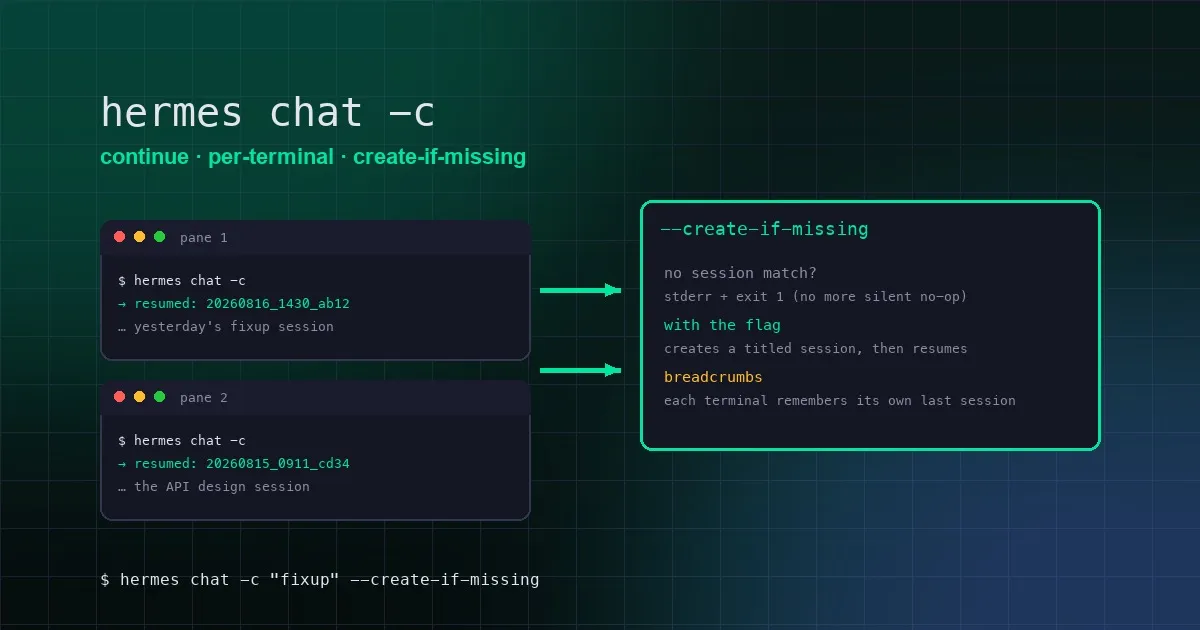
hermes chat -c: Continue Your Own Session per Terminal, or Create It on the Fly
Two tmux panes, two conversations, one command each — v0.20.2's terminal breadcrumbs make a bare `hermes chat -c` resume THIS terminal's own last session. Named lookups fail loudly on stderr now, and --create-if-missing spins up a fresh titled session when nothing matches.
Read more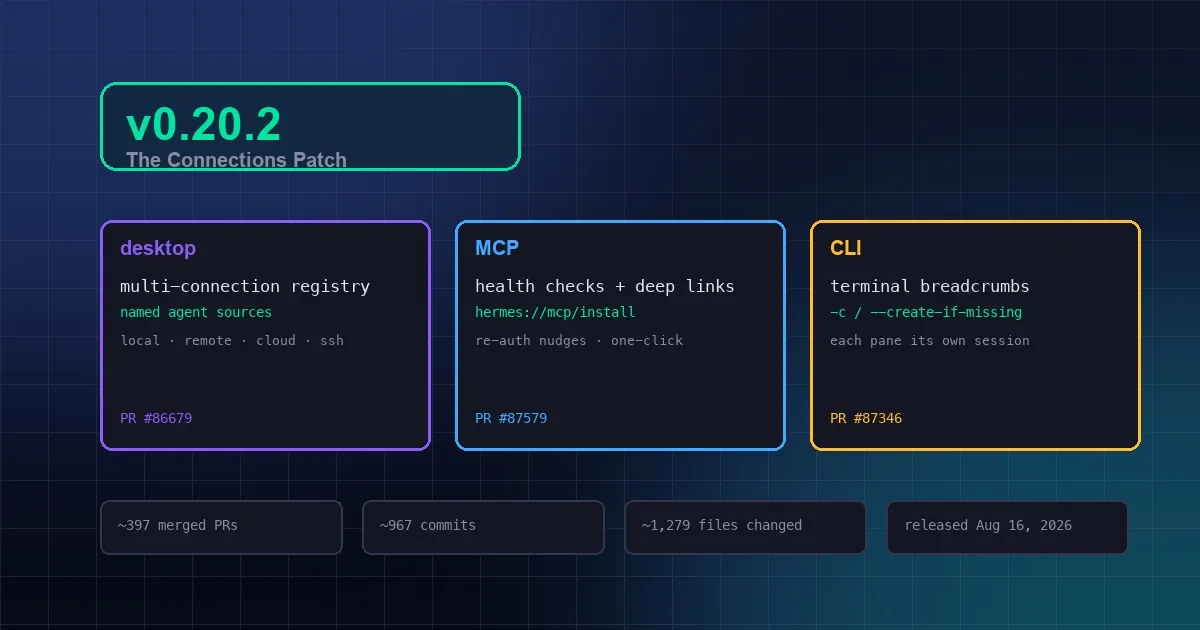
Hermes v0.20.2: The Connections Patch — Multi-Gateway Desktop, One-Click MCP Installs, and Per-Terminal Sessions
v0.20.2 merges ~397 PRs in three days. The desktop app gains a real multi-connection registry (local, remote gateways, Hermes Cloud, SSH hosts), MCP gets hermes:// one-click installs and background health checks, and terminal breadcrumbs let each pane continue its own session.
Read more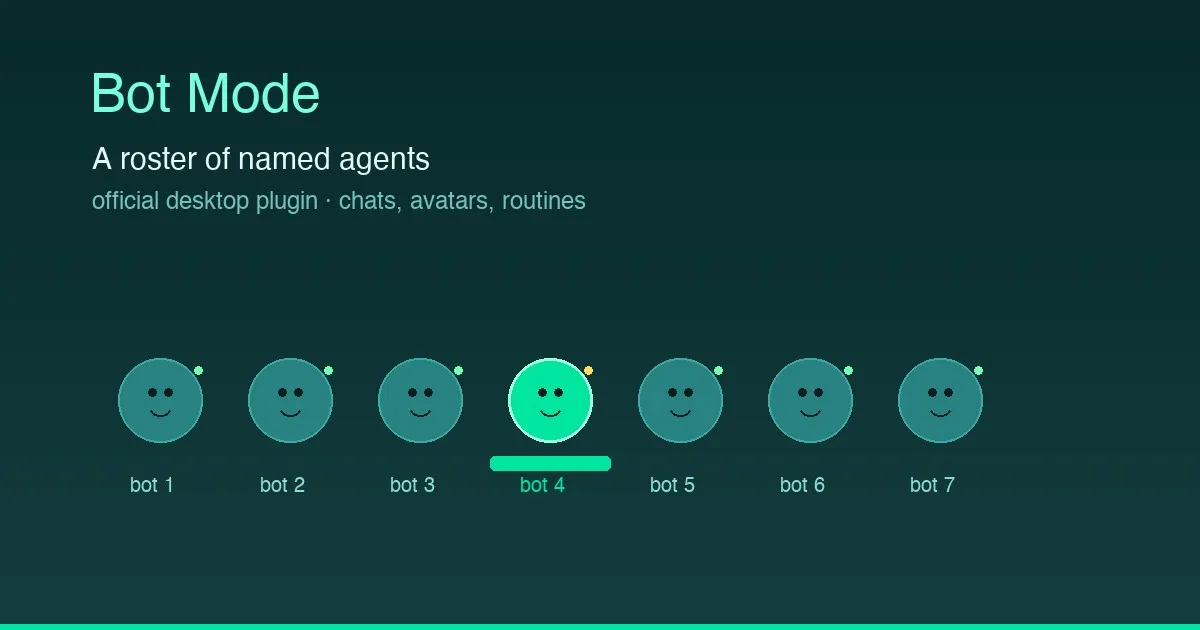
Hermes Bot Mode: Turn Your Profiles into a Roster of Named Bots — Official Desktop Plugin, Fully Explained
Nous Research's official desktop plugin (launched Aug 13, 503★) turns Hermes profiles into a roster of named bots — each with its own chat, avatar, personality, and schedule. Bots pane, instant New Agent, AI portraits, bot-to-bot messaging, @mentions, and the multi-source agents foundation.
Read more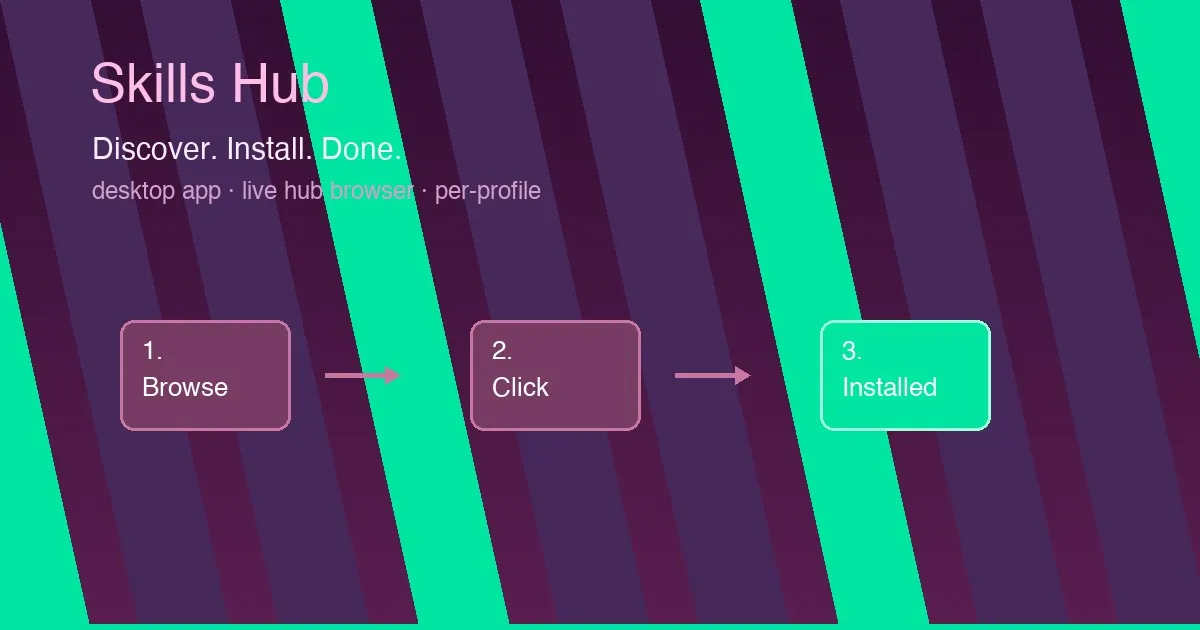
Hermes Desktop Skills Hub: Browse, One-Click Install, and Per-Profile Isolation — No More Memorizing Commands
The desktop Skills tab is now the single home for skill management AND discovery: an embedded live Skills Hub browser, one-click installs that refuse duplicates, a full-skill detail pane, and Capabilities-wide profile scoping. Merged to main on Aug 15–16, 2026.
Read more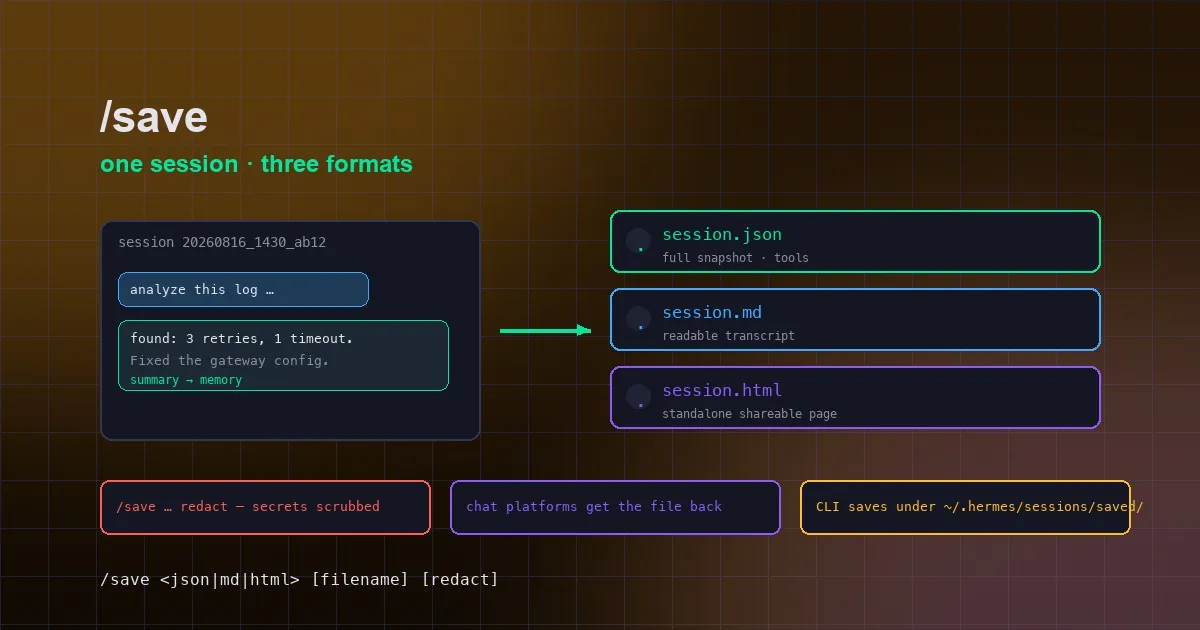
/save: export any session as JSON, Markdown, or HTML — even from chat
Spent three hours debugging with Hermes and want to keep the whole conversation? The /save command exports the current session as JSON, Markdown, or HTML, the redact flag scrubs secrets first, and chat platforms get the file delivered straight back to you.
Read more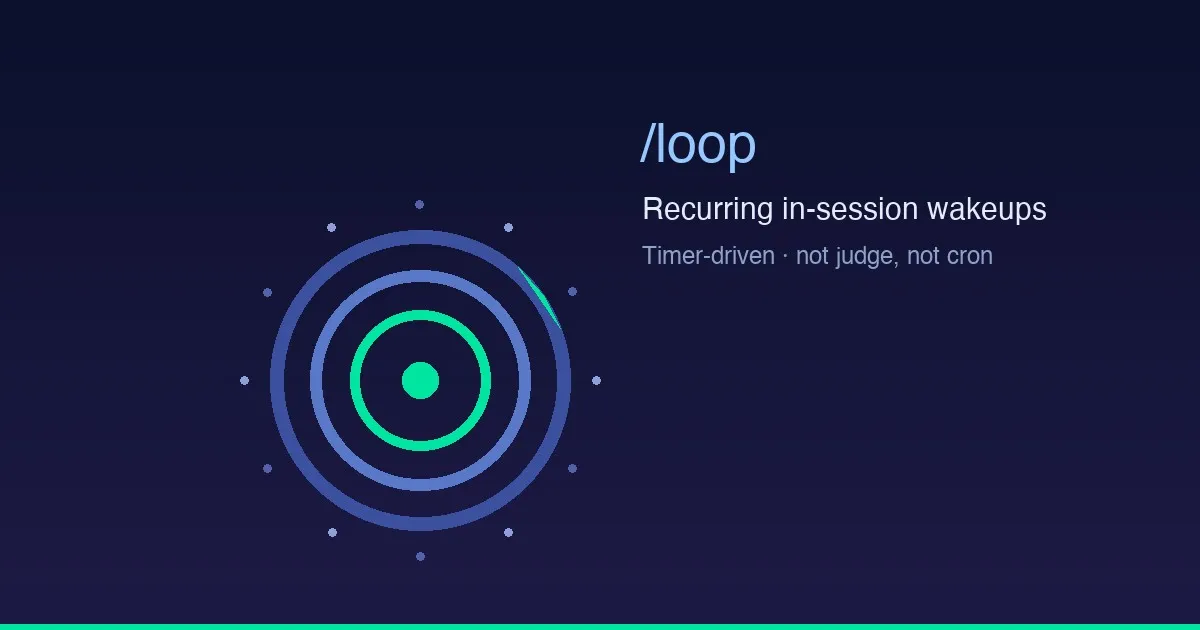
/loop: Hermes' Recurring In-Session Wakeups — Timer-Driven, Not Judge-Driven, Not Cron
/loop is Hermes' take on Claude Code's command: re-run a prompt on a fixed or self-paced cadence inside the live session, on every surface — CLI, TUI, desktop, and all messaging platforms. Architecturally distinct from judge-driven /goal and schedule-driven cron, with zero extra LLM cost.
Read more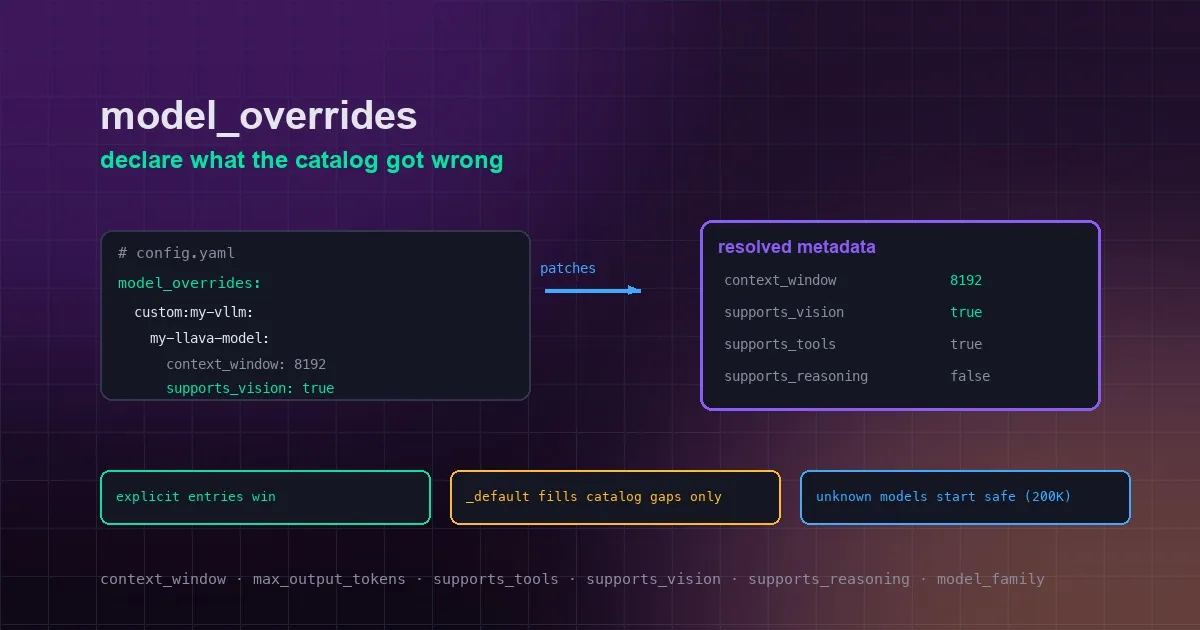
Hermes doesn't know your model? Declare context window and capabilities with model_overrides
When model-catalog data is wrong or missing, Hermes misjudges context windows and capabilities. The model_overrides config section lets you declare context_window, vision, tool support and more by hand — for local vLLM servers, brand-new models, and custom endpoints.
Read more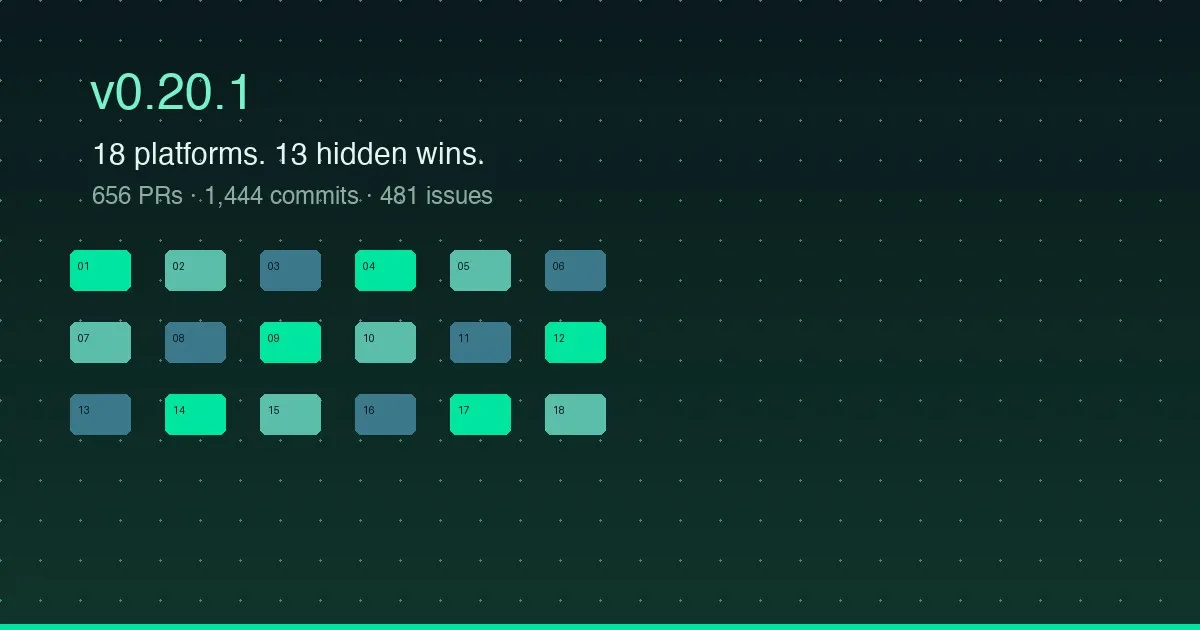
Hermes v0.20.1: 18 Platforms and 13 Hidden Efficiency Wins You Probably Missed
v0.20.1 quietly merged 656 PRs and 1,444 commits, but the official notes only say 'full docs ship with v0.21.0'. The 13 wins hiding in this patch: Windows setup stops hanging, Anthropic prompt caching comes back, session resume restores your model, state.db self-heals…
Read more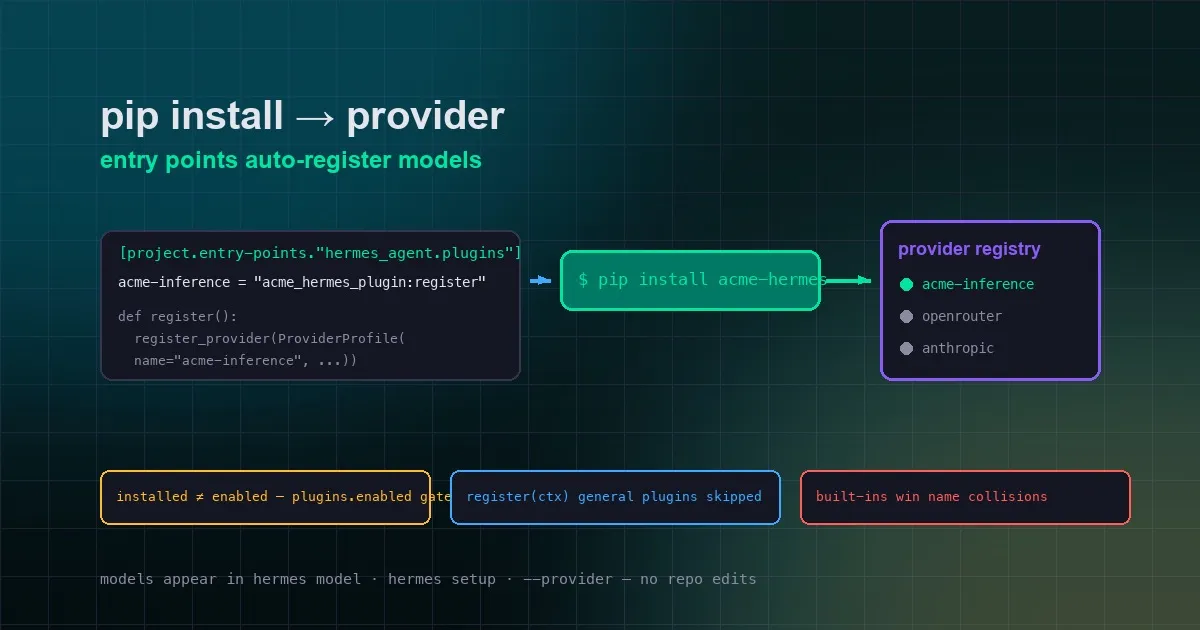
Package Your Own Model Provider for Hermes as a pip Plugin
Your team runs an internal inference gateway, and every new model means hand-editing Hermes' config.yaml — on every developer's machine. PR #85504 (merged August 13) makes model providers pip-installable: declare an entry point in pyproject.toml, and Hermes auto-discovers the provider at startup — its models show up in the registry like any built-in. This post covers the mechanism, the plugins.enabled opt-in gate, and the safety boundaries.
Read more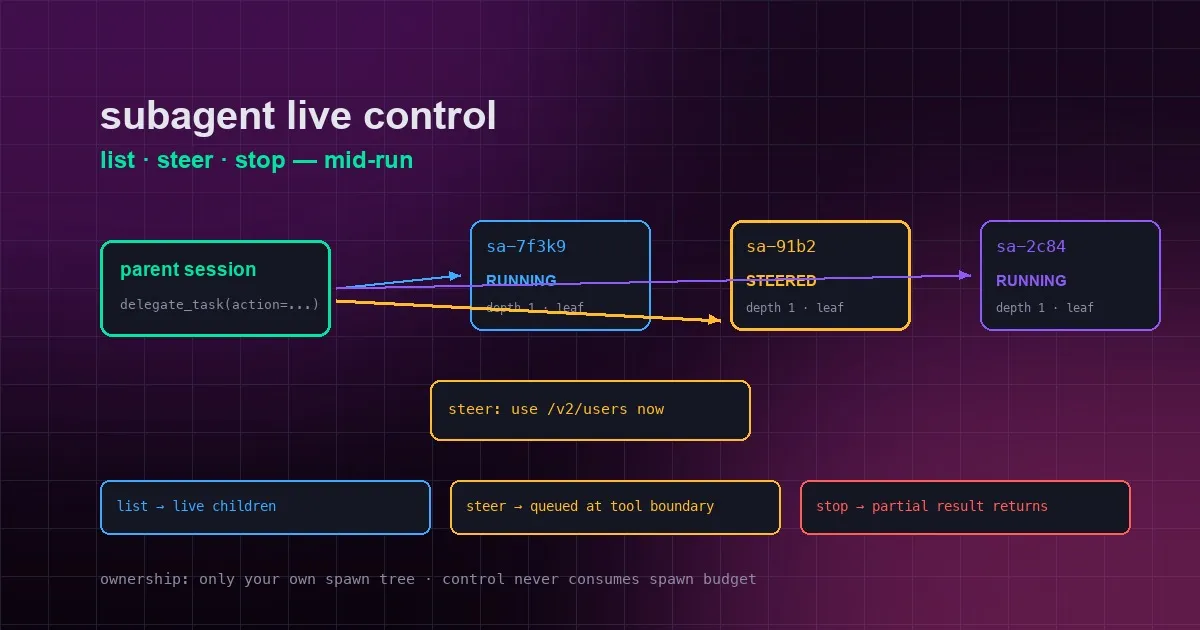
Your Subagent Is Going the Wrong Way? Now You Can Steer It Mid-Run
You dispatched three subagents to parallelize a refactor, and one of them is charging in the wrong direction — rewriting against an API that no longer exists. Until August 13, your only option was to kill the whole batch and re-explain. PR #85232 gives delegate_task a real-time control plane: action='list' to see running subagents, action='steer' to course-correct one mid-flight, and action='stop' to end one early — without touching the others.
Read more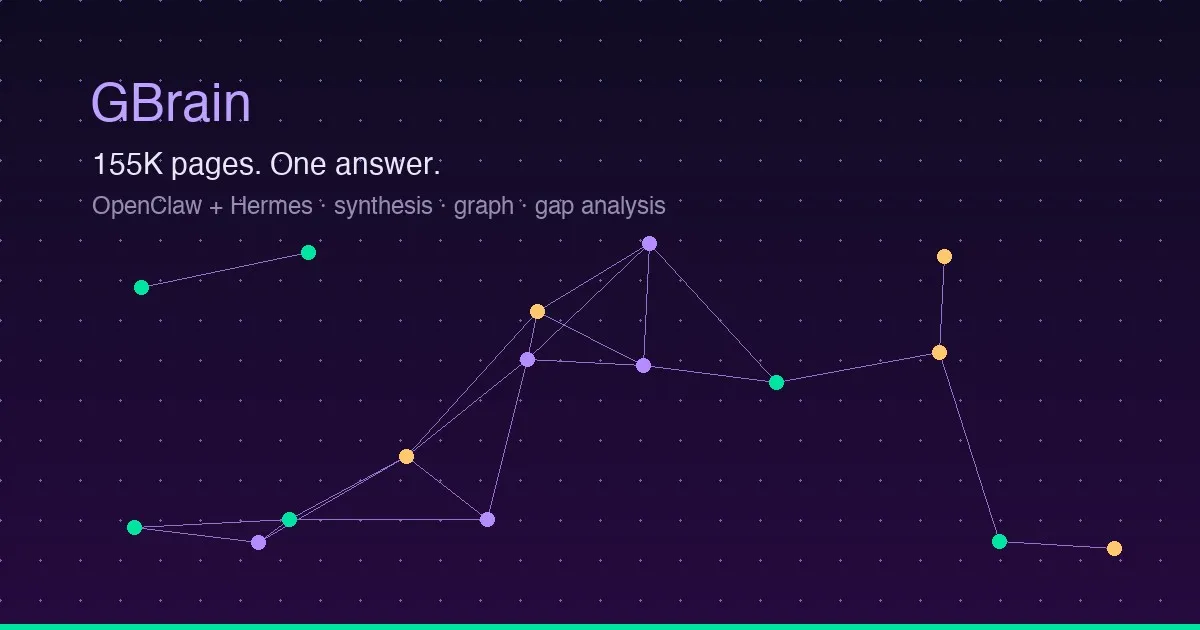
The YC President Runs Hermes on a 155K-Page Brain — Inside GBrain, the Open-Source Memory Layer for Agents
Garry Tan (Y Combinator CEO) open-sourced the AI brain layer behind his own OpenClaw and Hermes deployments: 155,795 pages, 24,589 people, 5,340 companies. Synthesis + knowledge graph + gap analysis — how to give Hermes 'world memory', not just chat memory.
Read more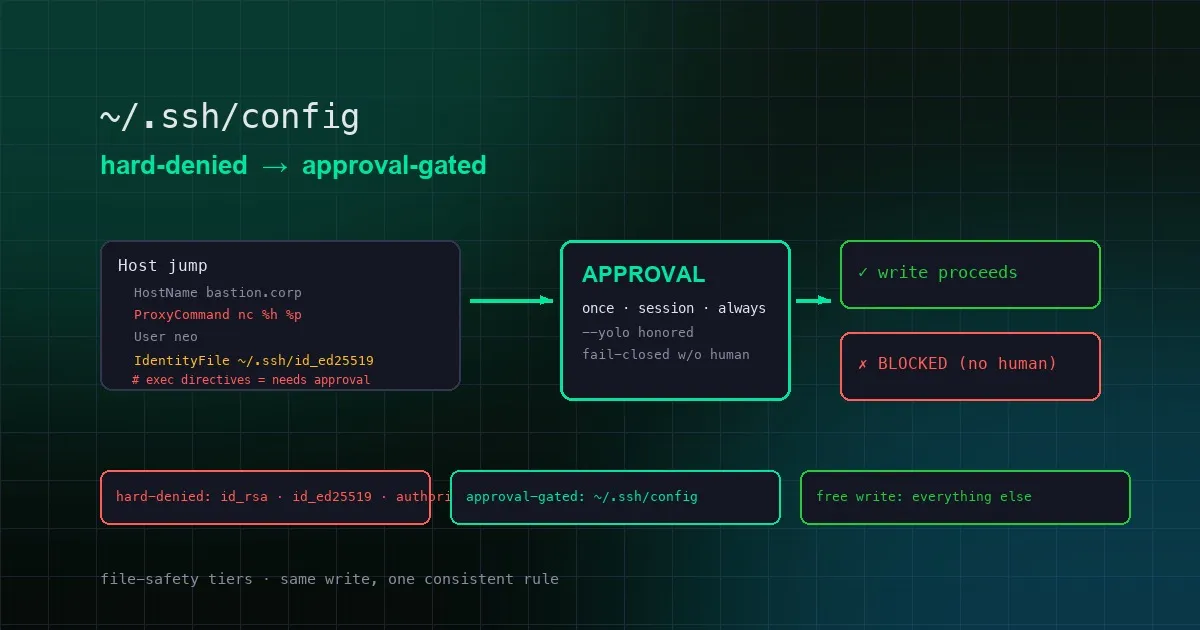
Want Hermes to Edit Your SSH Config? Now It Asks First
Writing ~/.ssh/config used to flip-flop: write_file hard-denied it as a 'protected credential file' while the terminal tool only asked for approval. PR #84663 (merged Aug 12) unified the rule — the SSH client config moved from hard-denied to approval-gated, while private keys stay absolutely untouchable. This post explains Hermes' file-safety tier model and the full approval-gate behavior (once/session/always, --yolo, fail-closed without a human).
Read more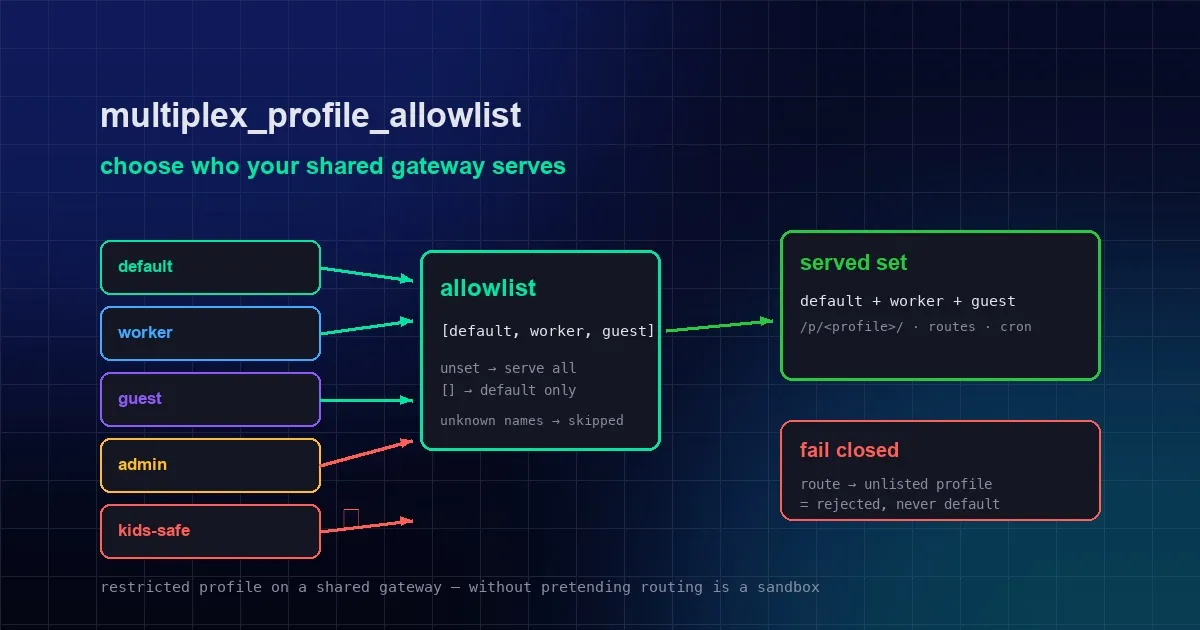
Your Shared Gateway Shouldn't Serve Every Profile: multiplex_profile_allowlist in Hermes
PR #83400 (merged August 11, 2026) adds gateway.multiplex_profile_allowlist to Hermes: a multiplex gateway now serves only the named profiles you choose, and when a profile_routes match lands on a profile that is missing or outside the allowlist, the gateway rejects the message instead of silently falling back to default. Full config example, exact allowlist semantics, and a restricted-profile scenario included.
Read more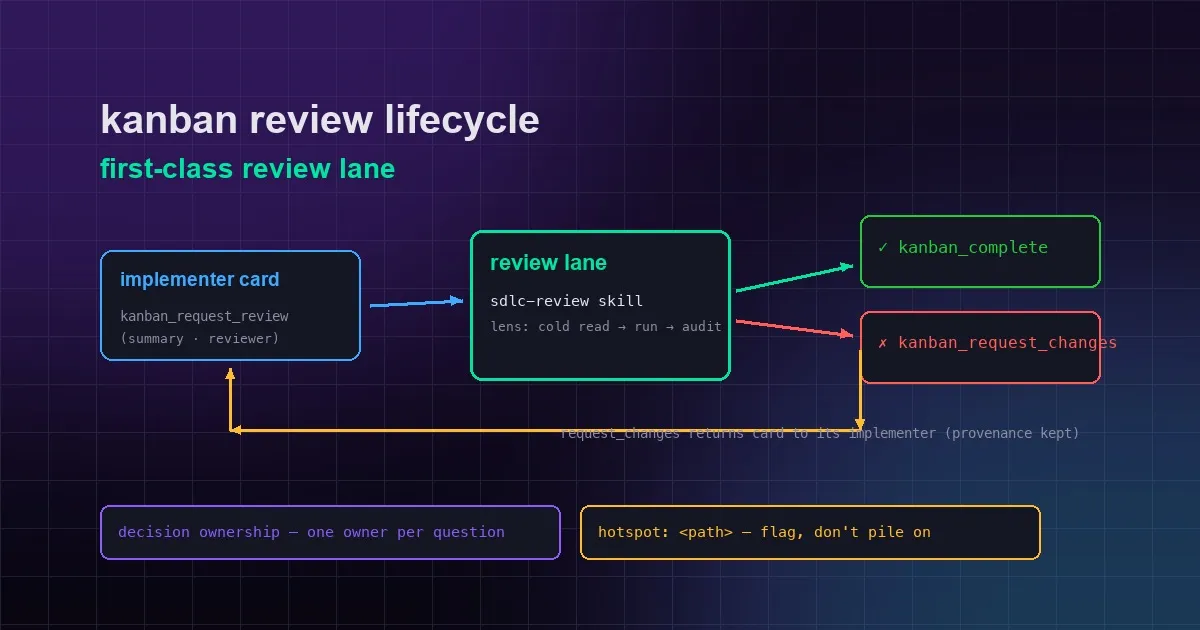
Who Reviews the Code When 5 Agents Work in Parallel? Hermes Kanban's New Review Lifecycle
A cluster of PRs merged on August 10, 2026 (#83412, #83423, #83424, #83428) gives Hermes kanban a first-class review lifecycle: kanban_request_review moves a card into a review lane, the reviewer (guided by the sdlc-review skill) approves, requests changes, or escalates, and a rejected card returns to its original implementer with provenance intact. Three guardrails round it out: rotating review lenses per round, a decision-ownership contract against split-brain, and collision-hotspot flagging.
Read more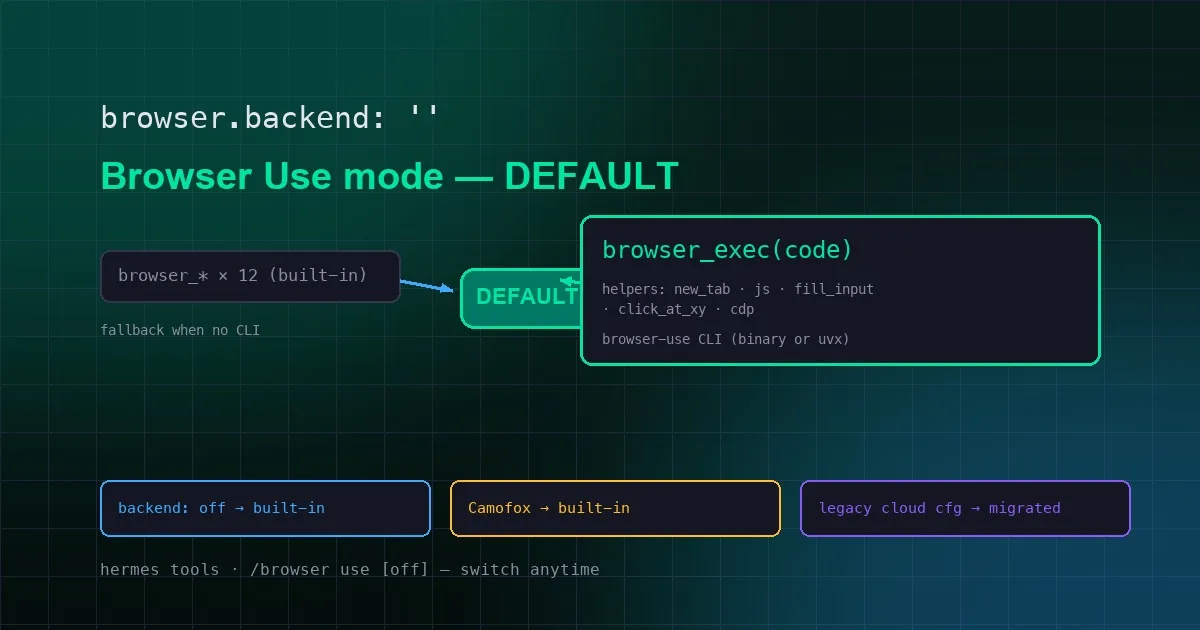
Hermes Now Defaults to Browser Use Mode: Your Browser Tools Just Changed
As of PR #83402 (merged August 10, 2026), Browser Use mode is Hermes' default browser backend: with browser.backend unset, the model gets a single browser_exec tool whenever the browser-use CLI is runnable — and automatically falls back to the built-in browser_* tools when it isn't. Here is the exact default rule, how to check which mode you are on, and how to switch back.
Read more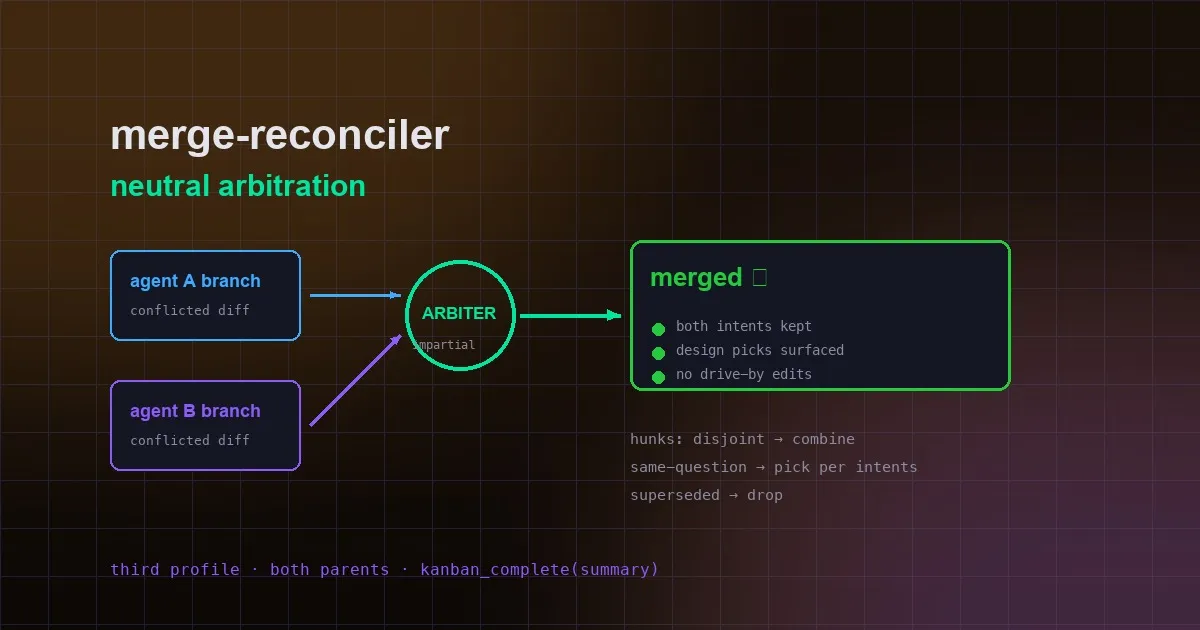
Two Agents' Code Collides? Send in a Third Agent as the Referee
When two agents work in parallel and their branches touch the same file, merge conflicts are inevitable. Letting one of the authors resolve them usually ends with one side silently overwriting the other. Hermes' new merge-reconciler skill takes a cleaner approach: dispatch a neutral third-party agent to arbitrate, armed with both diffs and both sides' stated intents. Here is how the skill works, what the arbitration rules are, and how to land it on a kanban board.
Read more